Resources & Recipes
Cook Once, Eat Three Times: High-Protein, High-Fiber Soups for Midlife
Seasonal ingredients, simple meal prep, and two nourishing recipes to support muscle health, gut health, and balanced blood sugar.
November 4, 2026 · 9 min read
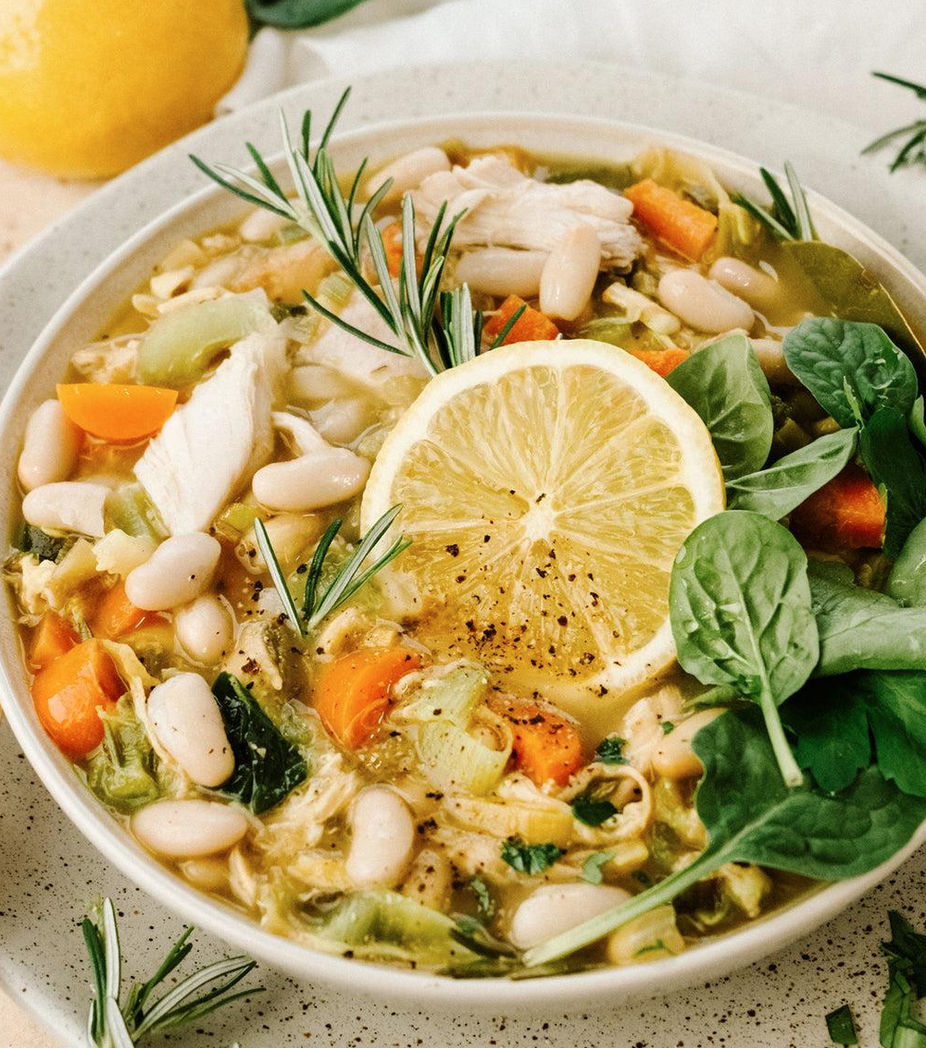
There's something especially comforting about having a big pot of homemade soup simmering on the stove.
Lately, I've been making more high-protein, high-fiber soups, taking advantage of seasonal vegetables, fresh herbs, beans, and simple ingredients that nourish the body without requiring hours in the kitchen.
One of my favorite things about making soup? Cook once, eat two or three times.
Having something nutritious already prepared in the refrigerator makes eating well so much easier. No need to cook from scratch every day, no last-minute scrambling for meals, and no sacrificing nutrition because life gets busy.
And as we navigate midlife, I believe this kind of simple, intentional meal preparation becomes even more valuable.
Because eating well isn't about restriction or perfection. It's about making nourishing choices easier, more enjoyable, and sustainable.
Why Protein and Fiber Matter Even More in Midlife
During perimenopause and menopause, hormonal changes can influence how our bodies store fat, maintain muscle, and regulate blood sugar.
As estrogen levels change, many women experience shifts in body composition, including increased abdominal fat and a gradual decline in lean muscle mass.
Insulin sensitivity can also change during this transition, making metabolic health an increasingly important part of the conversation.
But here's the good news: what we eat, how we move, and the habits we build every day can make a meaningful difference.
Two nutrients I prioritize are protein and fiber.
Protein: Supporting Muscle, Metabolism, and Satiety
Maintaining muscle mass becomes particularly important as we age.
Muscle isn't just about strength or appearance. It's metabolically active tissue that plays an important role in glucose metabolism, physical function, and healthy aging.
Getting adequate protein throughout the day helps support muscle maintenance, particularly when combined with resistance training.
Protein also helps us feel satisfied after meals, which can make consistent, balanced eating easier.
That's one reason I love adding chicken, lean beef, and beans to my soups. They turn a simple bowl of vegetables into something substantial and satisfying.
Fiber: A Powerful Tool for Gut and Metabolic Health
If you've been following my Haus of V Journal, you already know how much I love talking about fiber.
My personal goal is approximately 30 grams of fiber per day, ideally coming from a diverse range of whole foods.
Fiber supports digestive regularity, helps nourish beneficial gut bacteria, and plays an important role in cholesterol and blood sugar management.
Soluble fiber, found in foods like beans and legumes, can slow digestion and carbohydrate absorption, helping support a steadier blood sugar response after meals.
And because the gut microbiome is involved in many aspects of metabolic health, eating a variety of fiber-rich foods is a wonderful long-term habit.
Just remember to increase fiber gradually and drink adequate water, especially if your current intake is low.
Why Insulin Sensitivity Deserves Our Attention
Insulin is the hormone that helps glucose move from the bloodstream into our cells, where it can be used for energy.
When we're insulin-sensitive, our cells respond effectively to insulin. When insulin sensitivity decreases, the body may need to produce more insulin to manage blood glucose.
Changes in visceral fat, muscle mass, aging, and the menopausal transition can all influence this process.
The goal isn't to eliminate carbohydrates. It's to choose nutrient-dense sources of carbohydrates and pair them with adequate protein, fiber, and healthy fats.
Beans, vegetables, and lean proteins make a wonderful combination.
And that's exactly what these two soups offer.
The Beauty of Cooking with Seasonal Ingredients
One of the simplest ways to make nutritious food more enjoyable is to cook with what's in season.
Carrots, celery, zucchini, leafy greens, fresh herbs, onions, and tomatoes are incredibly versatile and bring a variety of vitamins, minerals, and protective plant compounds to our meals.
Seasonal cooking also encourages us to rotate ingredients, experiment with flavors, and enjoy a wider diversity of plants.
And don't overlook frozen vegetables or canned beans. They're convenient, nutritious, and make homemade cooking accessible even on busy days.
You don't need an elaborate recipe or expensive ingredients to create something nourishing.
Sometimes all you need is one pot, good-quality ingredients, and a little creativity.
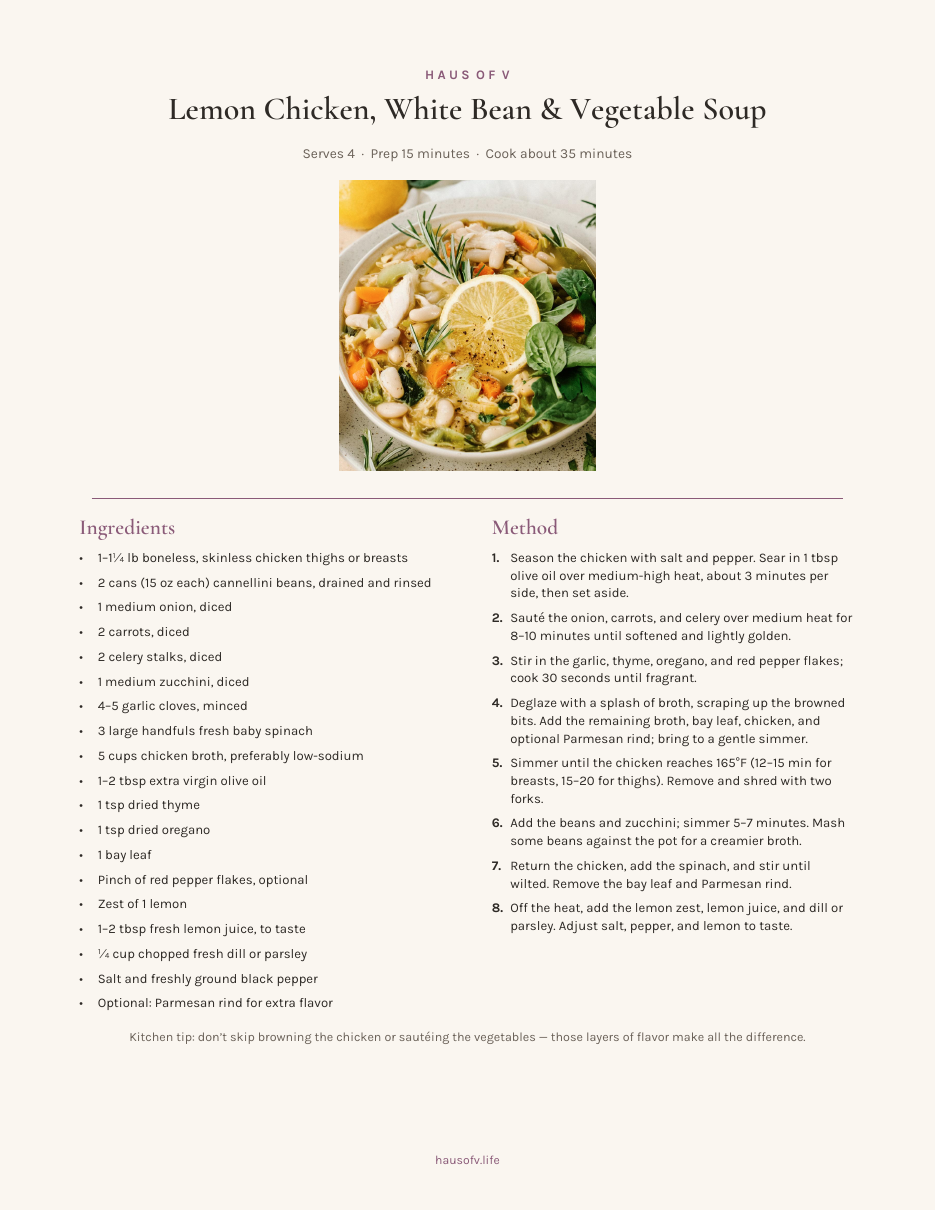
Recipe 1: Lemon Chicken, White Bean & Vegetable Soup
Bright, comforting, full of fresh herbs, and packed with protein and fiber.
This is a variation of a white bean and vegetable soup I recently made.
I loved the original, but wanted to give it a little more depth of flavor and increase the protein.
Adding chicken, a richer broth, extra garlic, herbs, and fresh lemon made a beautiful difference.
The cannellini beans create a naturally creamy texture without needing heavy cream, while the vegetables and herbs keep the soup fresh and light.
Servings: 4 generous portions
Prep time: 15 minutes
Cook time: Approximately 35 minutes
Ingredients
- 1–1¼ lb boneless, skinless chicken thighs or breasts
- 2 cans (15 oz each) cannellini beans, drained and rinsed
- 1 medium onion, diced
- 2 carrots, diced
- 2 celery stalks, diced
- 1 medium zucchini, diced
- 4–5 garlic cloves, minced
- 3 large handfuls fresh baby spinach
- 5 cups chicken broth, preferably low-sodium
- 1–2 tablespoons extra virgin olive oil
- 1 teaspoon dried thyme
- 1 teaspoon dried oregano
- 1 bay leaf
- Pinch of red pepper flakes, optional
- Zest of 1 lemon
- 1–2 tablespoons fresh lemon juice, to taste
- ¼ cup chopped fresh dill or parsley
- Salt and freshly ground black pepper
- Optional: Parmesan rind for extra flavor
Step-by-Step Instructions
My kitchen tip: Don't skip browning the chicken or sautéing the vegetables. Building those layers of flavor makes a big difference. A final squeeze of lemon brings everything together.
- Brown the chicken. Season the chicken with salt and pepper. Heat 1 tablespoon olive oil in a large soup pot over medium-high heat. Sear the chicken for approximately 3 minutes per side until lightly golden, then transfer it to a plate. It will finish cooking in the broth.
- Build the vegetable base. Reduce the heat to medium. Add the onion, carrots, and celery, along with a little additional olive oil if needed. Sauté for 8–10 minutes until softened and lightly golden.
- Add the aromatics. Stir in the garlic, thyme, oregano, and red pepper flakes. Cook for approximately 30 seconds until fragrant.
- Add the broth and chicken. Pour in a small amount of chicken broth and scrape up the flavorful browned bits at the bottom of the pot. Add the remaining broth, bay leaf, chicken, and optional Parmesan rind. Bring to a gentle simmer.
- Cook the chicken. Simmer until the chicken reaches an internal temperature of 165°F. Chicken breasts may take approximately 12–15 minutes; thighs may require 15–20 minutes, depending on thickness. Remove the chicken and shred it with two forks.
- Add the beans and zucchini. Add the cannellini beans and diced zucchini. Simmer for another 5–7 minutes until the zucchini is tender. For a slightly creamier broth, mash some of the beans against the side of the pot.
- Finish with greens and herbs. Return the shredded chicken to the pot. Add the baby spinach and stir until wilted. Remove the bay leaf and Parmesan rind.
- Brighten with lemon. Turn off the heat and add the lemon zest, fresh lemon juice, and chopped dill or parsley. Taste and adjust the salt, pepper, and lemon as needed.

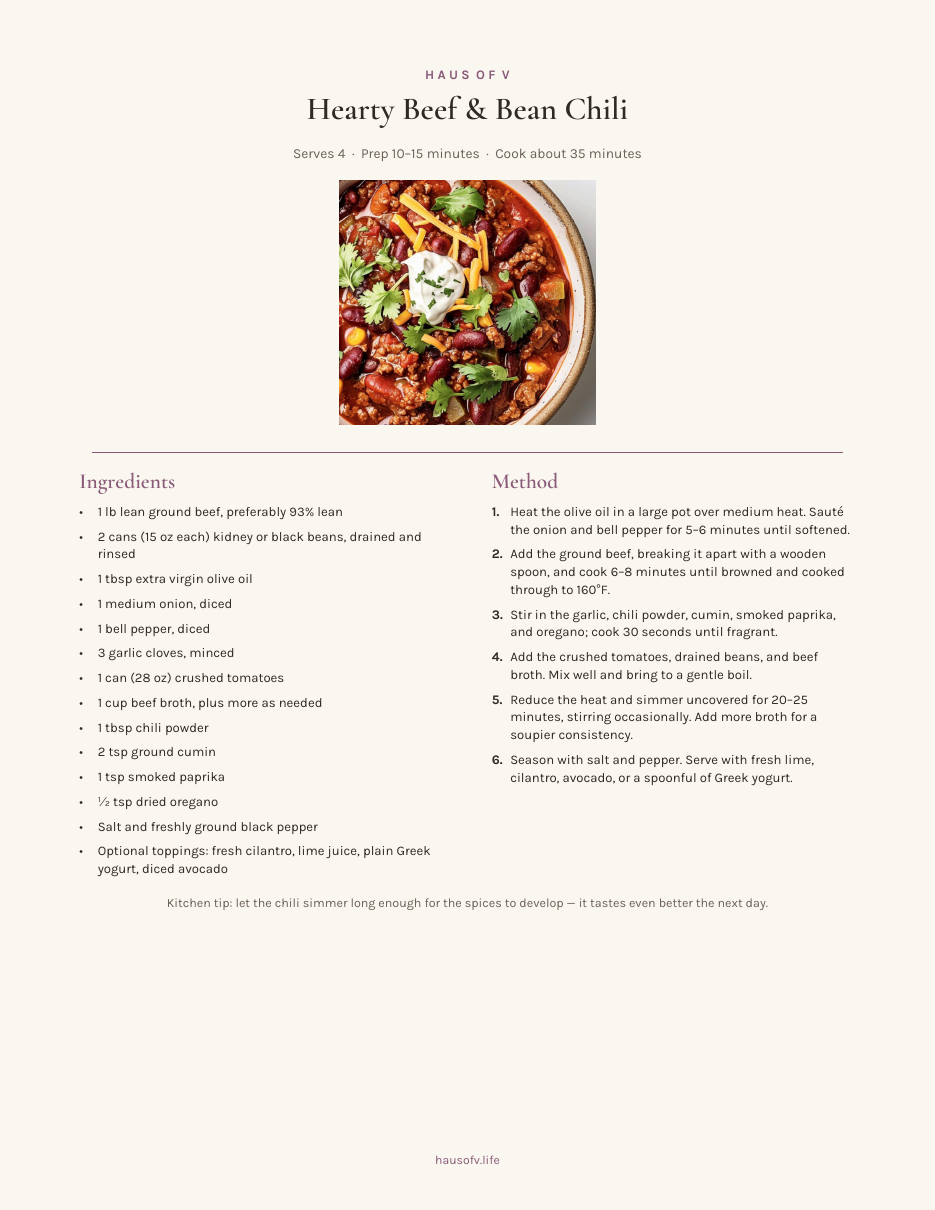
Recipe 2: Hearty Beef & Bean Chili
A deeply satisfying, protein-rich chili with fiber-packed beans, tomatoes, and warming spices.
The second recipe is my hearty beef and bean chili.
I love this one because it's simple, flavorful, and incredibly convenient to prepare in a larger batch.
Lean ground beef provides protein, iron, zinc, and vitamin B12, while beans add fiber, plant protein, and minerals.
Tomatoes, bell peppers, onions, and warming spices bring additional flavor and plant diversity.
And like many soups and stews, chili often tastes even better the next day as the flavors continue to develop.
Servings: 4 generous portions
Prep time: 10–15 minutes
Cook time: Approximately 35 minutes
Ingredients
- 1 lb lean ground beef, preferably 93% lean
- 2 cans (15 oz each) kidney or black beans, drained and rinsed
- 1 tablespoon extra virgin olive oil
- 1 medium onion, diced
- 1 bell pepper, diced
- 3 garlic cloves, minced
- 1 can (28 oz) crushed tomatoes
- 1 cup beef broth, plus more as needed
- 1 tablespoon chili powder
- 2 teaspoons ground cumin
- 1 teaspoon smoked paprika
- ½ teaspoon dried oregano
- Salt and freshly ground black pepper
- Optional toppings: fresh cilantro, fresh lime juice, plain Greek yogurt, diced avocado
Step-by-Step Instructions
My kitchen tip: Allow the chili to simmer long enough for the spices to develop. A little smoked paprika adds wonderful depth without requiring a long list of ingredients.
- Sauté the vegetables. Heat olive oil in a large pot over medium heat. Add the diced onion and bell pepper. Cook for 5–6 minutes until softened.
- Brown the beef. Add the lean ground beef, breaking it apart with a wooden spoon. Cook for approximately 6–8 minutes until fully browned and cooked through to 160°F.
- Add the spices. Stir in the minced garlic, chili powder, cumin, smoked paprika, and oregano. Cook for approximately 30 seconds until fragrant.
- Add the beans and tomatoes. Stir in the crushed tomatoes, drained beans, and beef broth. Mix well and bring to a gentle boil.
- Let it simmer. Reduce the heat and simmer uncovered for 20–25 minutes, stirring occasionally. If you prefer a soupier consistency, add a little more beef broth.
- Finish and serve. Season with salt and pepper. Serve with fresh lime, cilantro, avocado, or a spoonful of plain Greek yogurt for extra creaminess and protein.
Cook Once, Eat Two or Three Times
This might be my favorite part of making homemade soups.
Instead of cooking an entirely new meal every day, one pot can provide several nourishing meals throughout the week.
Here's how I like to approach it:
- Make a generous pot of soup using whatever seasonal vegetables and protein sources you have available.
- Enjoy a fresh bowl the day you make it.
- Refrigerate individual portions for easy lunches or dinners over the next few days.
- Freeze extra servings for another week.
- Add fresh herbs, lemon, avocado, or other toppings when serving to keep the flavors interesting.
For food safety, refrigerate soups promptly in shallow containers and use refrigerated leftovers within 3–4 days. Freeze anything you won't eat within that window. Reheat thoroughly before serving.
The benefit isn't just saving time. It's having a healthy, satisfying option readily available.
When nourishing food is already prepared, making balanced choices becomes much easier.
Small Habits, Meaningful Benefits
Supporting metabolic health during midlife doesn't have to involve complicated protocols or restrictive diets.
Sometimes the most effective approach is also the simplest.
Prioritize protein. Eat a diversity of fiber-rich plants. Include healthy fats. Stay physically active. Build and maintain muscle. And make meal preparation something that works with your lifestyle instead of against it.
These two soups are a perfect example of how simple ingredients can come together to create meals that are convenient, delicious, and supportive of long-term health.
Because nourishing ourselves should feel good.
And having a beautiful pot of homemade soup waiting in the refrigerator?
That's one little habit worth keeping.
With love,
Violetta | Haus of V
Eat well. Live well. Nourish yourself.
Save the recipe
Save the recipe
Sources & Further Reading
- Centers for Disease Control and Prevention — Fiber: The Carb That Helps You Manage Diabetes
- American Diabetes Association — Standards of Care in Diabetes, 2026: Nutrition and Healthy Behaviors
- European Society of Endocrinology — Clinical Practice Guideline for Menopause and Perimenopause
- International Menopause Society — Recommendations on Women's Midlife Health and Menopause
- USDA — How to Handle Leftovers Safely
Written by
Founder, Haus of V
Certified health coach working with women through midlife, hormone health, and longevity. This is educational content, not medical advice.
Keep reading
Get the letter
Twice-monthly essays on hormones, longevity, and food as medicine.